How EFT Tapping, Hypnotherapy and working with emotional triggers may help you change the pattern
Have you ever finished a stressful day and thought: “I just need a drink”.
- Maybe you’ve had a difficult conversation.
- Maybe work has been overwhelming.
- Maybe you’re worried about money, your relationship, your health or the future.
- Maybe nothing particularly dramatic has happened at all.
- You’re simply exhausted, your mind won’t switch off and you desperately want some relief.
So, you pour yourself a glass of wine…Or a beer…Or perhaps something stronger. And for a while…you feel better.
- Your thoughts slow down.
- Your body relaxes.
- The anxiety seems to disappear.
- You can finally breathe.
And because alcohol gave you that relief, your brain learns an association: “When I feel like this, drinking makes me feel better“.
That association can become incredibly powerful. And before long, you may find yourself drinking not because you particularly want alcohol…but because you don’t want to feel the way you feel without it.
What If Alcohol Has Become Your Tranquilizer?
This is something I often think about when working with people who use alcohol to cope with stress and anxiety. The alcohol isn’t necessarily the original problem. It may have become your solution to another problem.
Perhaps alcohol has become your way of:
- calming anxiety
- switching off your thoughts
- relaxing after a stressful day
- dealing with difficult emotions
- feeling more confident
- getting to sleep
- escaping from pressure
- avoiding uncomfortable feelings
- temporarily forgetting something that happened
In other words, alcohol may be doing a job for you. The problem is that it’s a job alcohol isn’t particularly good at doing long-term.
The National Institute on Alcohol Abuse and Alcoholism describes how drinking to cope with stress can provide temporary relief but may ultimately increase negative emotional states between episodes of drinking, reinforcing further drinking.
So, you can find yourself caught in a cycle:
Stress → Anxiety → Drink → Relief → More anxiety/stress → Drink
And eventually you can start wondering: “Why can’t I stop?”
Maybe the Better Question Is: “Why Do I Need the Drink?”
This is where I believe we need to look deeper. Rather than simply trying to suppress the drinking behaviour, we can become curious about what is happening underneath it.
Ask yourself: What happens immediately before I want a drink?
- What are you feeling?
- What are you thinking?
- What has happened?
- Who are you with?
- What are you trying to get away from?
And perhaps most importantly: “What do I want the alcohol to do for me?”
Do you want it to make you feel:
- Calm?
- Safe?
- Confident?
- Relaxed?
- Numb?
- Free?
- Less anxious?
- Less alone?
- Less overwhelmed?
Your answer can tell you a great deal.
Because if you can understand what the alcohol is doing for you, you can begin to find another way of meeting that need.
Is Something From Your Past Still Triggering You Today?
This is where my work becomes particularly interesting. I don’t believe that every anxiety problem is caused by trauma.
Anxiety is complex and can have many contributing factors, including genetics, current circumstances, learned responses, physical health, sleep, substance use and life stress.
But sometimes our present-day emotional reactions are connected to experiences from our past. You may have experienced something years ago that created a powerful emotional association.
Perhaps you were:
- Criticised
- Rejected
- Humiliated
- Abandoned
- Bullied
- Controlled
- Frightened
- Neglected
- Or exposed to situations that left you feeling unsafe or powerless
You survived the experience. You moved on. You may even believe you’ve completely forgotten about it.
But then something happens today.
- Someone criticises you
- Someone becomes angry with you
- You make a mistake
- Someone doesn’t reply to your message
- You feel rejected
- You’re under pressure
And suddenly you experience an enormous emotional response.
- Your heart races
- Your stomach tightens
- Your thoughts start racing
- You feel overwhelmed
And your brain remembers the quickest way it knows to change that state: “Have a drink”.
The Trigger Isn’t Necessarily the Problem
Imagine a smoke alarm going off in your house. You could take the batteries out. The noise would stop. But you haven’t necessarily dealt with whatever caused the alarm.
Sometimes alcohol can function a little like those batteries. It changes the feeling. It quietens the alarm. It gives you relief. But it doesn’t necessarily change what is causing the alarm to go off.
That’s why I believe that simply telling someone: “Just stop drinking” can be an incomplete solution.
If we don’t address what the person is using alcohol to cope with, we may simply remove their coping mechanism without giving them something better in its place.
This Is Where EFT Tapping Can Be Interesting
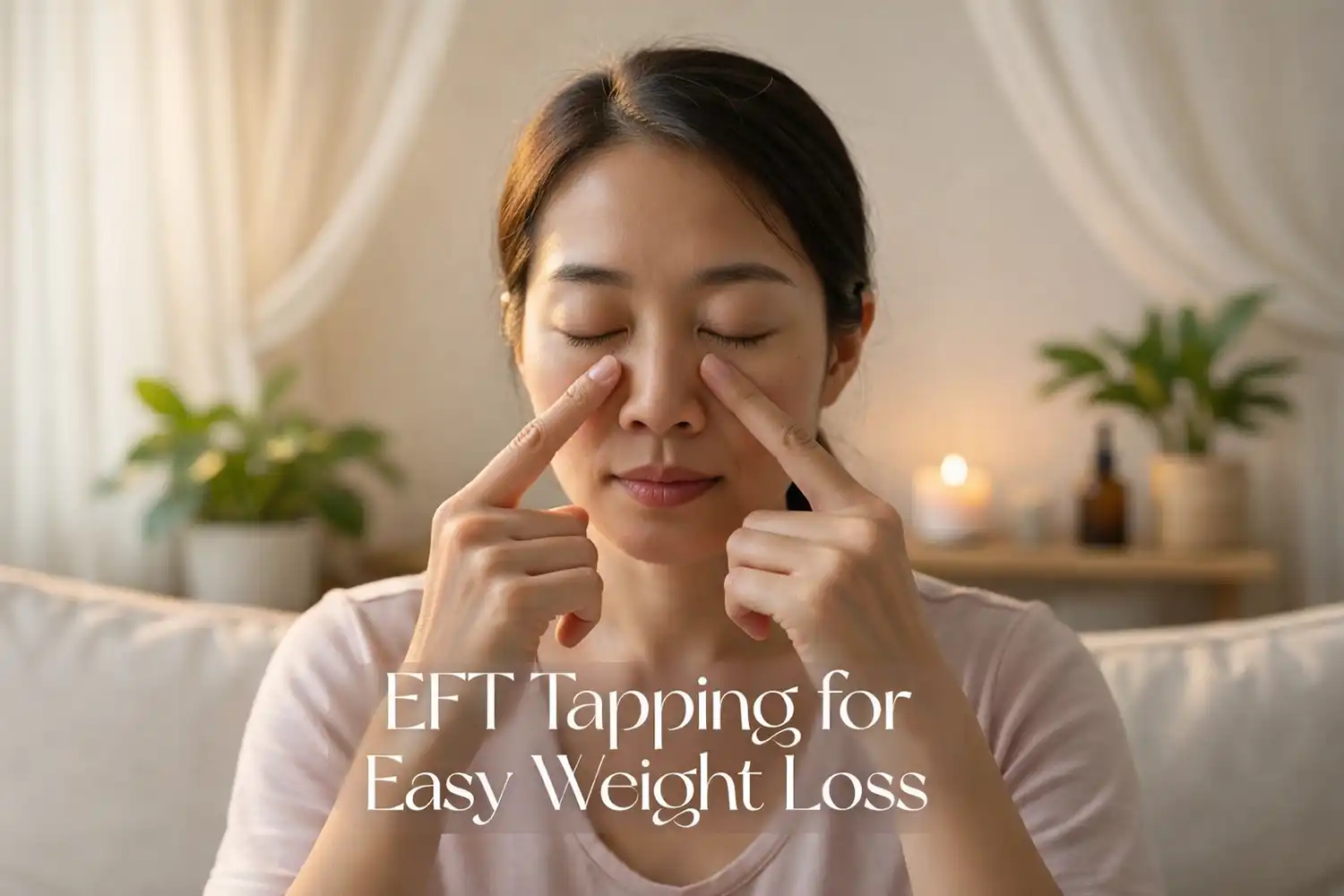
One of the approaches I use is Emotional Freedom Techniques (EFT), commonly known as EFT Tapping.
EFT combines elements of psychological exposure and cognitive techniques with stimulation of acupressure points through tapping. (Bond University Research Portal)
And there is now a growing body of research investigating Clinical EFT.
Dr Peta Stapleton, a researcher at Bond University, has been one of the researchers contributing to this field.
A 2022 systematic review co-authored by Stapleton examined the research into Clinical EFT across psychological and physiological conditions. The review describes Clinical EFT as having three essential components: exposure, cognitive framing and acupressure. (Bond University Research Portal)
That’s important because EFT isn’t simply about “tapping on yourself and thinking positive thoughts.” The therapeutic process involves working with the emotional issue itself.
You identify what is bothering you.
You bring the relevant experience, thought, feeling or trigger into awareness. You work with the emotional response. And the aim is to help reduce the intensity of that response.
What Does the Research Say About EFT and Trauma?
This is particularly relevant when someone has anxiety or stress connected to difficult past experiences.
In a 2023 systematic review and meta-analysis, Peta Stapleton and colleagues examined Clinical EFT as a treatment for PTSD.
Six studies met their inclusion criteria.
When EFT was compared with wait-list, usual care or no-treatment controls, the researchers found significant and large effects.
When EFT was compared with active treatments, however, the results were more mixed, with outcomes broadly comparable to other evidence-based therapies. (Bond University Research Portal)
I think that distinction is important. I don’t want to tell you that EFT is a magic technique.
I don’t want to promise that tapping will simply erase your trauma. And I don’t want to suggest that one technique works for everybody.
What the research does tell us is that Clinical EFT has been the subject of a meaningful body of clinical research, including research involving anxiety, stress and trauma-related symptoms. (Bond University Research Portal)
You Don’t Have to Erase the Past
One phrase I sometimes hear in the world of personal development is: “We need to delete the trauma from your subconscious.”
I prefer to think about it differently. We can’t change what happened.
But we may be able to change the emotional response you continue to have to what happened. Think about a memory that still makes you feel something when you remember it.
Perhaps you notice:
- fear
- anger
- sadness
- shame
- tension
- anxiety
- a racing heart
- a feeling of being trapped
- an urge to escape
The memory is in the past. But the emotional reaction is happening now.
Therapeutic work can explore whether that emotional response can change.
A 2026 theoretical paper co-authored by Peta Stapleton proposes several possible mechanisms that may contribute to EFT’s effects, including exposure within an individual’s window of tolerance, cognitive and emotional processing, self-compassion and acceptance. The authors are clear that this is a theoretical framework rather than definitive proof of a single mechanism. (Bond University Research Portal)
And that is the way I prefer to approach this work.
Not: “I’m going to delete your past.”
But: “Let’s see whether we can change the way your past is affecting you today.”
What About Hypnotherapy?
Hypnotherapy can be another useful tool for some people. Hypnosis isn’t about handing control of your mind over to somebody else.
Rather, it can involve a state of focused attention and relaxation that may allow therapeutic work around thoughts, beliefs, emotions and behavioural patterns.
When combined appropriately with other therapeutic approaches, it can provide another avenue for exploring the automatic patterns that influence behaviour.
And that word — automatic — is important. Because much of what we do every day isn’t the result of a conscious decision.
We develop patterns, associations, habits and ways of responding to particular situations. And sometimes those patterns continue long after the original circumstances have changed.
What About NLP?
I also use Neuro-Linguistic Programming (NLP) as part of my therapeutic toolkit. NLP focuses on patterns involving our thoughts, language, perceptions and behaviour.
I believe the important thing is not to become attached to one particular technique. Different people respond differently.
What matters is understanding the person sitting in front of you and choosing appropriate tools for the individual.
For some people, EFT may be particularly useful.
For others, hypnotherapy may be helpful.
For others, a combination of approaches may be appropriate.
And sometimes the most appropriate recommendation is to involve a psychologist, GP, addiction specialist or another health professional.
Good therapy isn’t about forcing everyone through the same process.
It’s about finding the right process for the person.
Imagine the Pattern Changing
At the moment, your pattern might look something like this:
Something happens → You feel anxious or stressed → Your emotional response escalates → You want relief → You drink → You feel better temporarily
But imagine developing another pathway:
Something happens → You notice your trigger → You recognise the emotional response → You regulate your nervous system → You process the underlying issue → You have a choice about how you respond
That doesn’t mean you’ll never experience stress again. It doesn’t mean life will suddenly become perfect.
It means you may no longer need alcohol to be your primary emotional regulation strategy.
The Goal Isn’t Just to Stop Drinking
This is the distinction I want people to understand. If alcohol has become your way of coping with anxiety, simply taking alcohol away doesn’t necessarily solve the underlying problem.
You need something to replace its function. You need other ways of experiencing:
- Calm.
- Safety.
- Confidence.
- Relief.
- Emotional regulation.
- Connection.
- Resilience.
And sometimes you need to work with the experiences that contributed to the pattern in the first place.
The goal isn’t necessarily: “How can I force myself not to drink?”
It can become: “How can I get to the point where I don’t need alcohol to cope in the way I used to?”
That’s a very different goal.
You Are Not Weak
If you use alcohol to cope with anxiety or stress, I don’t believe the most helpful response is to shame yourself. You found something that worked — at least temporarily.
Your brain learned: “This makes me feel better”.
That’s understandable.
But something can be understandable and still no longer be serving you.
NIAAA describes how alcohol can temporarily reduce anxiety and emotional discomfort while repeated heavy use and withdrawal can increase anxiety and negative emotional states, reinforcing further drinking. (NIAAA)
So perhaps this isn’t about asking: “What’s wrong with me?”
Perhaps the better question is: “What have I been trying to cope with?”
That question opens the door to change.
What If You Could Feel Different Without the Drink?
Imagine finishing a stressful day… and not automatically reaching for alcohol.
Imagine experiencing an uncomfortable emotion… and knowing how to work with it.
Imagine remembering something from your past… without it producing the same overwhelming emotional response.
Imagine feeling anxious… and knowing: “I can handle this”.
That is the kind of change I want to help people explore.
Not simply taking something away.
But helping you develop the internal resources and emotional flexibility to no longer need it in the same way.
If This Sounds Like You
If alcohol has become your way of managing anxiety, stress or difficult emotions, you don’t have to figure it all out by yourself.
The first step doesn’t have to be: “I must stop drinking forever”.
It can simply be: “I want to understand why I feel that I need to drink”.
From there, we can explore the triggers, emotions, beliefs and experiences that may be contributing to the pattern.
Depending on your circumstances, this may include EFT Tapping, hypnotherapy, NLP and other appropriate therapeutic or health-professional support.
If you’re ready to explore what’s underneath your drinking pattern, I’d love to help you take the first step.
You don’t have to spend the rest of your life fighting yourself.
Sometimes the most powerful change begins when you stop asking: “How do I stop drinking?” and start asking: “What do I need to heal, change or learn so I no longer need alcohol to cope?”
This article is for educational purposes and is not intended to diagnose or treat alcohol use disorder, anxiety, PTSD or any other medical or psychological condition. If you drink heavily or may be physically dependent on alcohol, seek medical advice before stopping or significantly reducing your alcohol intake, as withdrawal can be dangerous.
The strongest research-based authority section is the Peta Stapleton/Bond University material. Bond’s current research profile shows Stapleton continues to publish on Clinical EFT, including a September 2026 systematic review and network meta-analysis on EFT for psychological and physiological stress reduction. (Bond University Research Portal)