Understand your stress. Discover your patterns. Learn your tools. Find your calm.
Stress is a normal part of life; we all experience it. Work pressures, family responsibilities, financial concerns, relationship challenges, unexpected events and simply having too much to do can all place demands on our minds and bodies.
But while we can’t always control what happens around us, we can learn ways to respond to stress differently. That’s where stress resilience comes in.
Building resilience doesn’t mean that you’ll never feel stressed, worried or overwhelmed again. It means developing a better understanding of your stress response and having practical tools available to help you navigate challenging moments.
At the Hypnosis & Emotional Freedom Centre (HEFC), we use approaches including EFT Tapping and Clinical Hypnotherapy to support people who want to explore different ways of managing stress, anxiety and emotional patterns.
And you don’t have to wait until you’re overwhelmed to start. We’ve created four FREE resources to help you begin your journey:
Understand → Discover → Learn → Find Your Calm
Let’s take a look at each step.
Step 1: Understand Your Stress Response
Before we can change the way we respond to stress, it can help to understand what’s actually happening inside us. Have you ever noticed that when you’re stressed or anxious, your reaction can sometimes seem much bigger than the situation itself?
- Your heart might race
- Your thoughts might start going around in circles
- You may feel tense, restless or unable to switch off
- You might know logically that you’re safe, yet your body still seems to be responding as though something is wrong
This can be a very uncomfortable experience. And when we don’t understand what’s happening, it can sometimes create another layer of anxiety: “Why am I feeling like this?”
Understanding your stress and anxiety response can be the first step towards feeling more in control.
Your stress response is designed to protect you
Stress isn’t necessarily a sign that something is wrong with you. Your body’s stress response is a protective mechanism. When your brain perceives a threat, pressure or challenge, your body can prepare you to respond.
This can be incredibly useful when you need to react quickly.
The difficulty is that modern life can provide plenty of situations that activate this response without there being an immediate physical danger.
- A difficult email
- An upcoming meeting
- A financial worry
- A challenging conversation
- A thought about something that might happen
- Even replaying something that happened yesterday can keep your mind and body feeling under pressure
Once you understand that your body is trying to protect you, you may begin to look at your stress response differently.
Instead of asking: “What’s wrong with me?”
You can begin to ask: “My mind and body are having a stress response. What can I do to support myself right now?”
Your FREE “Turn Anxiety into Calm” eBook
This is why we’ve created our FREE Turn Anxiety into Calm eBook. It can help you better understand anxiety and your stress response and explore ways of moving from feeling overwhelmed towards greater calm.
If you’ve ever wondered why anxiety can feel so powerful—or why simply telling yourself to “calm down” doesn’t always work—this is a great place to start.
Understanding what is happening doesn’t necessarily make stressful situations disappear. But knowledge can change the way you relate to your experience. And sometimes, understanding your response is the first step towards changing it.
Step 2: Discover How Stress Is Affecting You
Once you understand a little more about the stress response, the next question is: “How is stress actually affecting me?”
We can become so accustomed to being busy, tense or overwhelmed that we don’t always recognise how much stress we’ve been carrying.
- Maybe you’re functioning normally on the outside while feeling exhausted on the inside
- Maybe you find yourself constantly thinking about what could go wrong
- Perhaps you’re having trouble sleeping or switching off
- Or maybe you simply feel like you’re operating in “survival mode”
Taking a moment to step back and notice what’s happening can be incredibly valuable.
Take our FREE Stress & Anxiety Quiz →
We’ve created a FREE Stress & Anxiety Quiz to help you explore your current experience of stress and anxiety. It gives you an opportunity to pause and reflect on how stress may be affecting different areas of your life. Think of it as a starting point—not a diagnosis or a label.
It’s simply an opportunity to ask yourself: “How am I really doing?”
Once you have greater awareness of what’s happening, you can begin to consider what tools might help. And that’s where our next step comes in.
Step 3: Learn a Practical Tool with EFT Tapping
When we’re stressed, it can sometimes feel as though we’re at the mercy of our emotions. We know we want to feel calmer, but we don’t know what to do in the moment. This is where learning practical techniques can make a difference. One approach you may like to explore is EFT Tapping.
What is EFT Tapping?
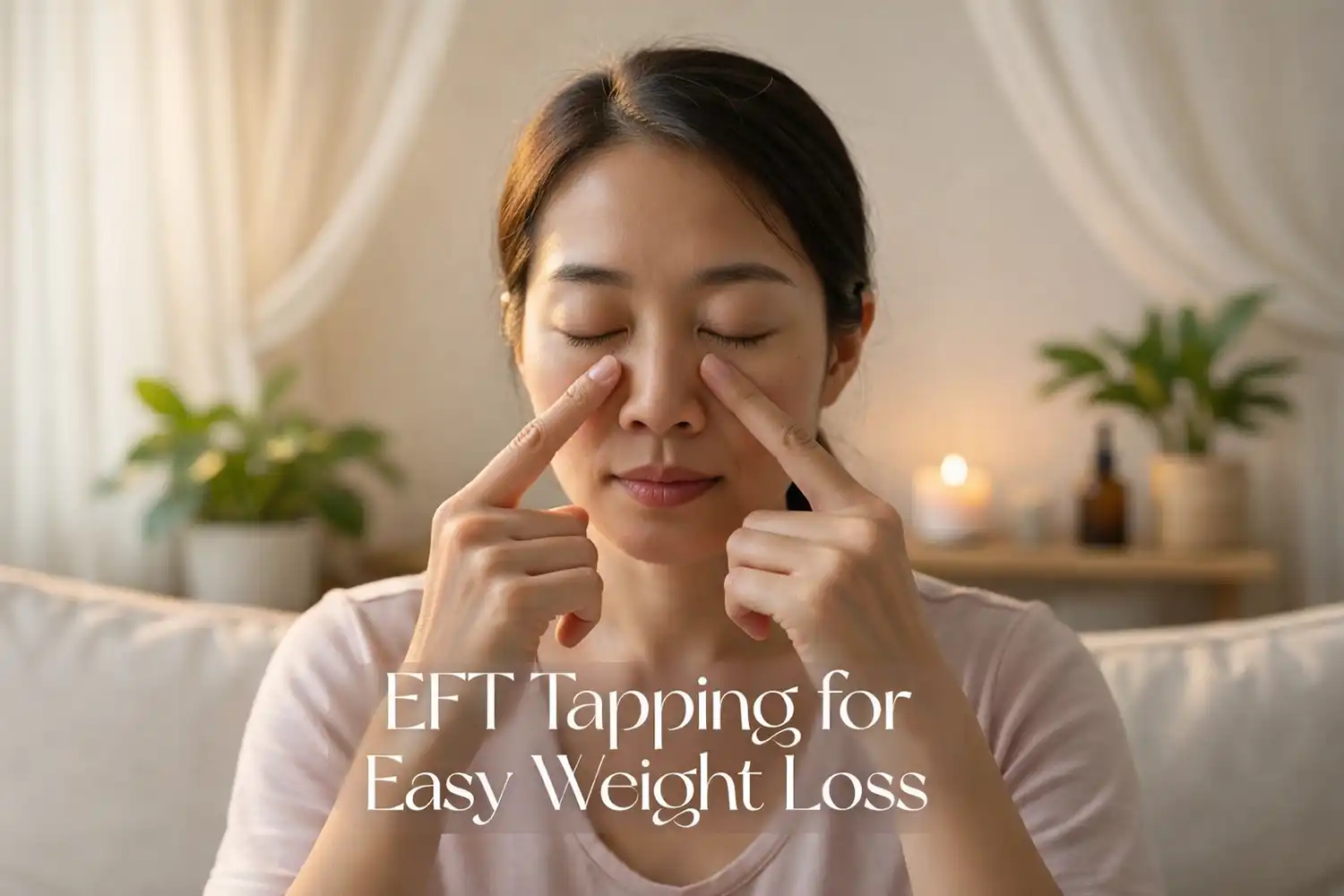
EFT stands for Emotional Freedom Techniques and is commonly known as “Tapping”. It involves gently tapping on specific points on the body while focusing your attention on a particular thought, emotion or stressful situation.
One of the things people appreciate about EFT is that it gives them something practical to do when they’re feeling emotionally activated. Rather than trying to push uncomfortable feelings away, EFT encourages you to acknowledge what you’re experiencing while using the tapping process.
For example, imagine you’ve had a difficult conversation with someone. Hours later, you’re still replaying it in your mind. You might notice tension in your body, repetitive thoughts and a strong emotional reaction to what happened.
You could begin by acknowledging what you’re feeling:
“Even though I’m feeling really stressed about what happened, I’m willing to acknowledge how I’m feeling right now.”
You can then continue with the tapping process while focusing on the stressful thought or emotion. The goal isn’t to pretend the situation didn’t happen. It’s about giving yourself an opportunity to pause, acknowledge your response and see whether the emotional intensity changes.
EFT Can Become Part of Your Everyday Toolkit
Once you’ve learned EFT, you may choose to use it at different times. For example:
- When you’re feeling overwhelmed
- Before an important meeting
- After a difficult conversation
- When you’re caught in a cycle of worry
- When you’re experiencing emotional tension
- When you can’t seem to switch off
- Before going to bed
- When you notice yourself becoming emotionally reactive
You don’t necessarily have to wait until you’re at breaking point. Like any skill, becoming familiar with a technique when you’re relatively calm can make it easier to remember and use when you need it.
Learn EFT for FREE
We’ve created a FREE EFT Tapping eBook and Video to help you learn more about this technique and start exploring how it may fit into your own stress-management toolkit.
Get your FRE EFT Tapping eBook & Video →
It’s another simple step towards having more tools available when life feels challenging.
Step 4: Find Your Calm with Hypnotherapy
- Understanding your stress response is valuable.
- Discovering your patterns is valuable.
- Learning practical tools such as EFT is valuable.
But sometimes we also need to simply stop.
- To breathe.
- To slow down.
- To give our mind and body some space.
This is where hypnotherapy can become another useful tool in your stress-resilience toolkit.
How can hypnotherapy support stress resilience?
Hypnosis is often experienced as a deeply relaxed and focused state of attention.
During hypnotherapy, you’re guided through the process while remaining aware and in control. For some people, this provides an opportunity to step away from the constant demands of everyday thinking and focus on relaxation and calm.
Hypnotherapy can also provide an opportunity to explore thoughts, beliefs and patterns that may influence how we respond to stressful situations. Our responses to stress can be influenced by our experiences, habits and learned patterns. Sometimes the same situations can trigger the same reactions again and again.
Exploring these patterns can be one part of developing new ways of responding.
Try Our FREE Hypnotherapy Track for Stress Reduction
If you’d like to experience hypnotherapy for yourself, we’ve made it easy to take your first step. HEFC offers a FREE Hypnotherapy Track for Stress Reduction.
It gives you an opportunity to slow down, create some quiet space and experience guided hypnosis from the comfort of your own home.
Give yourself permission to pause
You could listen when you have some quiet time during the day, after work, or as part of a relaxing evening routine. The important thing is to give yourself permission to step away from the constant demands of everyday life—even if it’s only for a little while.
Listen to the FREE Stress Reduction Hypnotherapy Track →
You don’t have to wait until you’re completely overwhelmed before you make time for yourself. Regular moments of relaxation can become part of your approach to building resilience.
EFT and Hypnotherapy: Two Different Tools for Your Toolkit
EFT and hypnotherapy aren’t the same thing. But they can complement a broader approach to managing stress and emotional wellbeing.
EFT Tapping gives you a practical technique you can learn and use when you’re experiencing emotional intensity or stress.
Hypnotherapy provides a guided experience that can help you relax and explore patterns, thoughts and responses associated with stress.
You might think of it like this: EFT gives you something you can actively practise.
Hypnotherapy gives you an opportunity to slow down, relax and work with your internal experience in a different way.
The aim isn’t to eliminate every source of stress from your life. It’s to develop more choices in how you respond.
A Simple Stress-Resilience Practice You Can Try
Building resilience doesn’t have to involve making huge changes overnight. Small, consistent practices can be a useful place to start.
Try this simple five-step process.
1. Pause
Stop for a moment. Take a comfortable breath and notice what’s happening.
2. Name it
Ask yourself: “What am I feeling right now?” It might be stress, frustration, worry, anger, fear or overwhelm. You don’t have to judge the feeling. Simply acknowledge it.
3. Rate it
Give the feeling an intensity rating from 0–10. This can give you something to compare before and after using a technique.
4. Use a tool
Try some EFT Tapping while focusing on the thought or emotion. Or, when you have more time, listen to the FREE Stress Reduction Hypnotherapy Track.
5. Check in
Ask yourself: “What has changed?”
- Maybe the intensity has reduced.
- Maybe your thoughts feel clearer.
- Maybe your body feels more relaxed.
- Maybe you’ve simply created enough space to think about your next step.
There doesn’t need to be a dramatic transformation every time. Resilience is built through practice.
Building Resilience Is Not About Doing Everything Yourself
There’s another important part of resilience that is sometimes overlooked. Being resilient doesn’t mean you should be able to cope with everything on your own.
Sometimes resilience means recognising that you need support.
If stress or anxiety is persistent, significantly affecting your daily life, interfering with your sleep or relationships, or becoming increasingly difficult to manage, consider calling our office and speaking with Wendy or Colin who are both qualified practitioners.